
08 Canon of Witnesses - The Language of the Crack: On Doris Salcedo’s Shibboleth
Doris Salcedo’s Shibboleth isn’t an installation. It’s a rupture. Architectural, historical, and ethical.
Canonical website source ↗ · All website captures · Original content HTML ↓
Credited website creators
Dorian Vale (Credited website author)
Rights and access
This is a stored copy of a public website publication, captured under the website owner’s archive instruction. Original source rights, image credits, citations and third-party exclusions remain applicable. Public access does not grant a new licence. External embeds and unpreserved files are explicitly identified below. Interactive source is retained as an inert HTML download; a live software environment is not guaranteed.
Source feature-image credit
By Nmnogueira at English Wikipedia, CC BY-SA 2.5.Published content
Dorian Vale
Museum of One, Independent Research Institute for Contemporary Aesthetics
Written at the Threshold
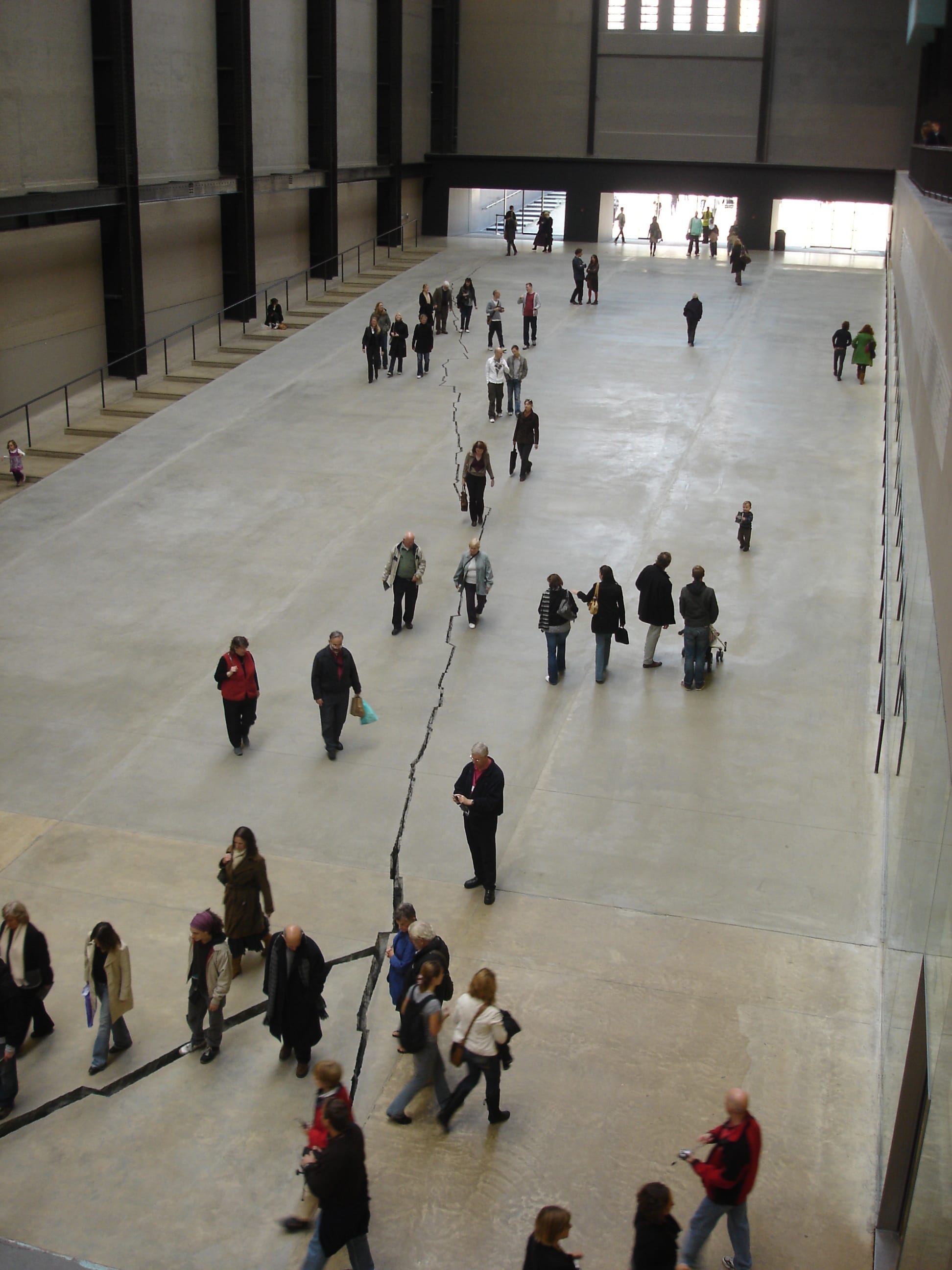
Doris Salcedo’s Shibboleth (2007) isn’t an installation. It’s a rupture. Architectural, historical, and ethical. Commissioned for the Turbine Hall of Tate Modern in 2007, the work unveiled a 167-meter crack carved directly into the museum’s concrete floor, as if a wound had opened inside the institution itself.
Its form was serpentine, jagged, and unpredictable. In some places, it was barely wide enough to catch a coin; in others, wide enough to swallow a child’s foot. But it was not merely a disruption of physical space. It was a disruption of inherited narratives, institutional stability, and the illusion of cultural coherence. The floor, which normally represents a museum’s foundation, both literally and symbolically, was here turned into evidence.
The first time you encounter the crack, it doesn’t appear crafted. It appears accidental. As though the museum has ruptured under the weight of its own certainty. It’s too irregular to be part of the design, too defiant to be explained away. It runs like a scar across the floor of the Turbine Hall: uneven, erratic, unapologetic. It doesn’t trace a pattern. It tears one.
Visitors don’t merely see the crack. They hesitate. Some stepped over it briskly, mistaking rupture for ornament. Others linger, crouch, tilt their heads, as though nearness might translate silence into sense. A few avert their gaze entirely, as one does when grief arrives without invitation or name. But none, not even the critics armed with footnotes and euphemisms, can pretend it is not there.
This is no object awaiting admiration. This is a wound, deliberate, disobedient, carved into the cathedral that once promised to keep culture intact.
Shibboleth is perhaps Salcedo’s most publicly invasive work. A literal breach in the foundation of one of the world’s most self-assured art spaces. The crack didn’t decorate the Turbine Hall; it divided it. It carved its way through the floor and through the viewer’s assumption of architectural trust. Some parts were shallow, others gaping. There was no consistency. And that was the point.
Salcedo didn’t install an artwork. She violated a building. The first sensation isn’t aesthetic. It’s bodily. Your gait shifts. Your posture changes. Your muscles hold the low-grade alertness of something being “off.” The architecture, once assumed whole, is now unpredictable. The viewer begins to walk with doubt. And it’s here that Salcedo’s genius quietly detonates. What she fractures is not merely the concrete, but the authority of the institution to frame violence in neutral tones.
The word shibboleth refers to a biblical test. A linguistic password that separated insiders from outsiders. Those who mispronounced it were killed. The difference was phonetic, not moral. A simple inflection meant the difference between belonging and annihilation. In choosing this word as her title, Salcedo transforms the work into a test of its own: who recognizes the violence, and who walks over it unfazed?
And yet, she never spells this out. There’s no wall text pointing toward colonialism, immigration, or racial exclusion, though all of these haunt the work. She offers no verbal script. Instead, she invites misreading. She tempts the viewer to aestheticize the scar, to flatten its trauma into motif, and in doing so, revealing their preference for theory over truth.
Salcedo’s refusal to interpret the work isn’t vagueness. It’s discipline. She refuses to grant the institution the final word. The crack isn’t explained. It’s endured. It’s the physical manifestation of every invisible line society has drawn between the “civilized” world and the bodies it has cost. And here, unmistakably, she aligns with the ethic of Post-Interpretive Criticism.
She does not illustrate grief. She builds with its residue. She doesn’t translate trauma. She embeds it untranslated, into structure. And in doing so, she removes the viewer’s comfort, of altitude, of the luxury to hover above the scene unscathed.
Shibboleth appears passive at first. But to stand beside it is to feel its violence. There is nothing theatrical about it. It’s dangerous. Children could fall in. Heels could catch. Wheelchairs must divert. It’s not a simulation of injury. It’s a real architectural breach. And that reality is what makes it sacred. Salcedo returns consequence to the gallery floor. She makes the act of walking, once passive, a moral reckoning.
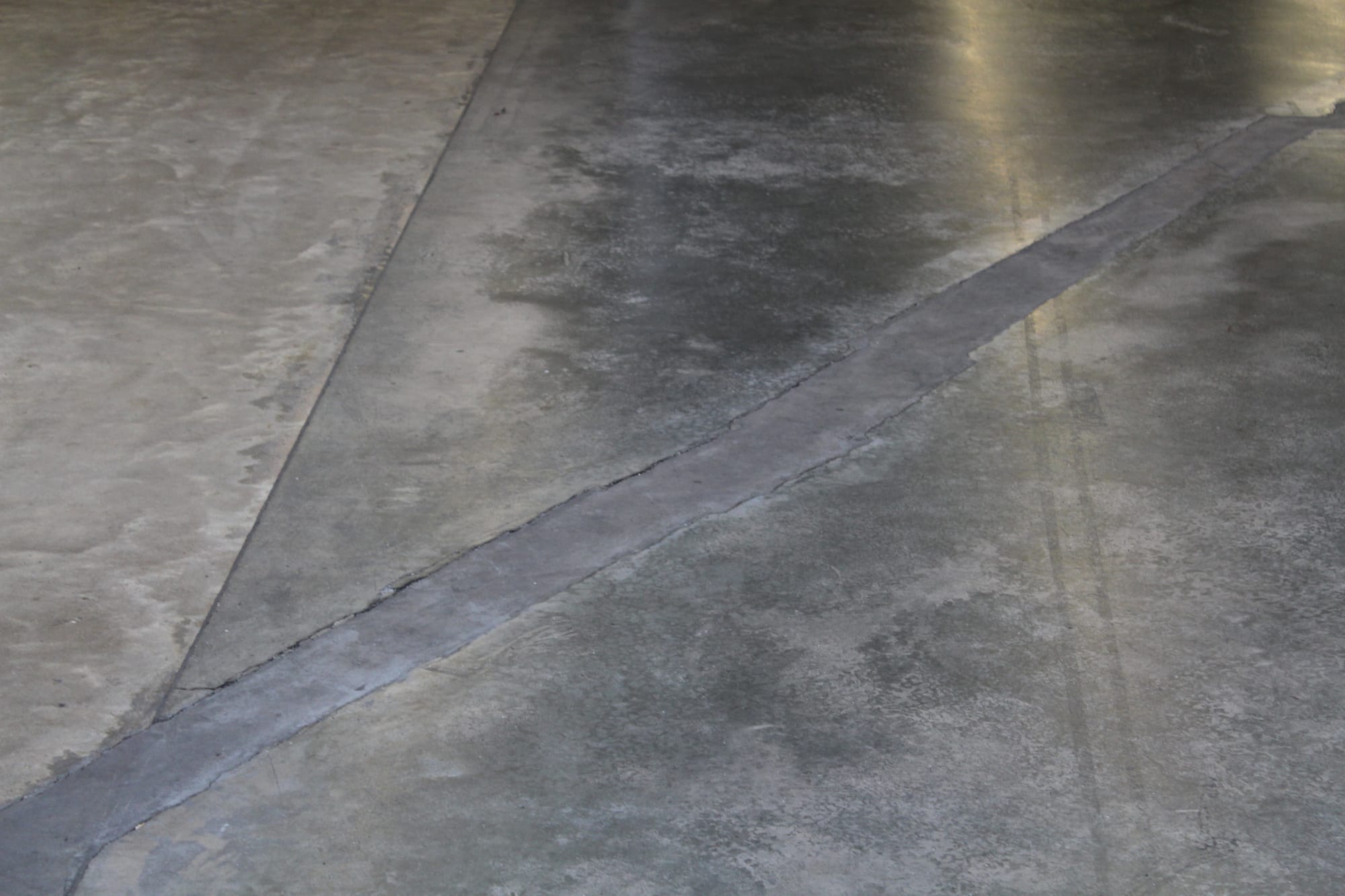
When Shibboleth was de-installed, if you dares to call the burial of a wound a “de-installation”, the museum sealed the crack. The concrete was patched. The floor repainted. But it wasn’t erased. A faint scar remains. Discolored. Disobedient. A quiet defiance against the institution’s desire for architectural amnesia.
This scar isn’t a memory. It’s a refusal to forget.
Most institutions commemorate trauma by encasing it. By sealing the wound in plaque and poetry. Salcedo does not commemorate. Sh leaves it open. She refuses smooth history. She refuses the elegance of a metaphor.
The crack does not stand for something. It is something. It’s not symbolic. It’s literal. And when the museum sealed it, it wasn’t an act of healing. It was an act of forgetting. And sealing isn’t meant to heal, it’s to silence.
To see the scar now requires moral alertness. More than vision. It demands moral alertness, a kind of ethical hearing. A readiness to remember that something once split this space. That something made the building tremble. And that the institution, for all its power, couldn’t make the floor forget, and that it couldn’t be entirely erased.
In this, she doesn’t merely exemplify the doctrine of Post-Interpretive Criticism; she prefigures it. She offers no language, only structure and architecture. She doesn’t decorate pain. She disciplines space. Her work demands not interpretation, but restraint. Not commentary, but moral proximity.
And it’s precisely because of this, because she asks the viewer not to speak, but to stay, that she stands as the right name inscribed into the Canon of Witnesses. She doesn’t illustrate the theory. She enacts it. She injures the institution with the rigor of one who knows that silence, when applied with discernment, can be more honest than any speech.
When a work carries residue rather than message, when it refuses to be named without distortion, the critic’s duty is to hold the silence, not to fill it. Salcedo gives us this lesson in concrete. Shibboleth isn’t just a crack in the floor. It’s a mark of what can’t be sealed. It’s a wound that refused to become past tense.
She didn’t create a sculpture.
She scarred a foundation so that the world would remember what it tries so hard to forget.
By Deror_avi - Own work, CC BY-SA 3.0
Museum of One, Written at the Threshold, 2025
10.5281/zenodo.17421407
Repository scope: These repository identifiers refer to The Canon of Witnesses volume record, not to a separately registered DOI for this individual essay.
Files, images and media
- Search the Digital Archive Libraryexternal link only · not_checkedThird-party or unreviewed reuse rights; no local preservation claim.
- Publisher – Museum of Oneexternal link only · not_checkedThird-party or unreviewed reuse rights; no local preservation claim.
- Journal of Post-Interpretive Criticismexternal link only · not_checkedThird-party or unreviewed reuse rights; no local preservation claim.
- Series – Canon of Witnessesexternal link only · not_checkedThird-party or unreviewed reuse rights; no local preservation claim.
- Web archive lookup – Library & Archives Canada (capture unverified)external link only · not_checkedThird-party or unreviewed reuse rights; no local preservation claim.
- The filled trace of Doris Salcedo's Shibboleth runs diagonally across a grey floor.local archival file · availablePublic site-uploaded asset captured under the site owner’s archive instruction. Original rights, credits and third-party exceptions remain applicable; no new licence is granted.193597 bytes · SHA-256 9afc34dd46cf1d46b42b6505fe49ec3c7edbc9a6ed82d829f07a2639a9afadd4
- <span style="white-space: pre-wrap;">By Nmnogueira at English Wikipedia, CC BY-SA 2.5.</span>local archival file · availablePublic site-uploaded asset captured under the site owner’s archive instruction. Original rights, credits and third-party exceptions remain applicable; no new licence is granted.338717 bytes · SHA-256 40f8cc5c956c6084e8b84616fb391f90e88f588278e3c8656553076947d95a41
Source-declared metadata
Transcribed declarations retain their source scope. Identifiers are not promoted to independently verified edition assignments.
Source content SHA-256: 3e067e475a199d6d7a96919a558b9b0ba922190dbe3b7ca9779793bdb0122ae5
Fields requiring qualification
- Language not explicitly supplied for this web record