04 Canon of Witnesses: Teresa Margolles & The Ethics of Residue
In another world, children would’ve run through them, laughing, bursting them midair. But not here. Not in this room. Here, the body hesitated before the intellect could intervene. Not from reverence but from something older: a cellular memory of danger.
Canonical website source ↗ · All website captures · Original content HTML ↓
Credited website creators
Dorian Vale (Credited website author)
Rights and access
This is a stored copy of a public website publication, captured under the website owner’s archive instruction. Original source rights, image credits, citations and third-party exclusions remain applicable. Public access does not grant a new licence. External embeds and unpreserved files are explicitly identified below. Interactive source is retained as an inert HTML download; a live software environment is not guaranteed.
Source feature-image credit
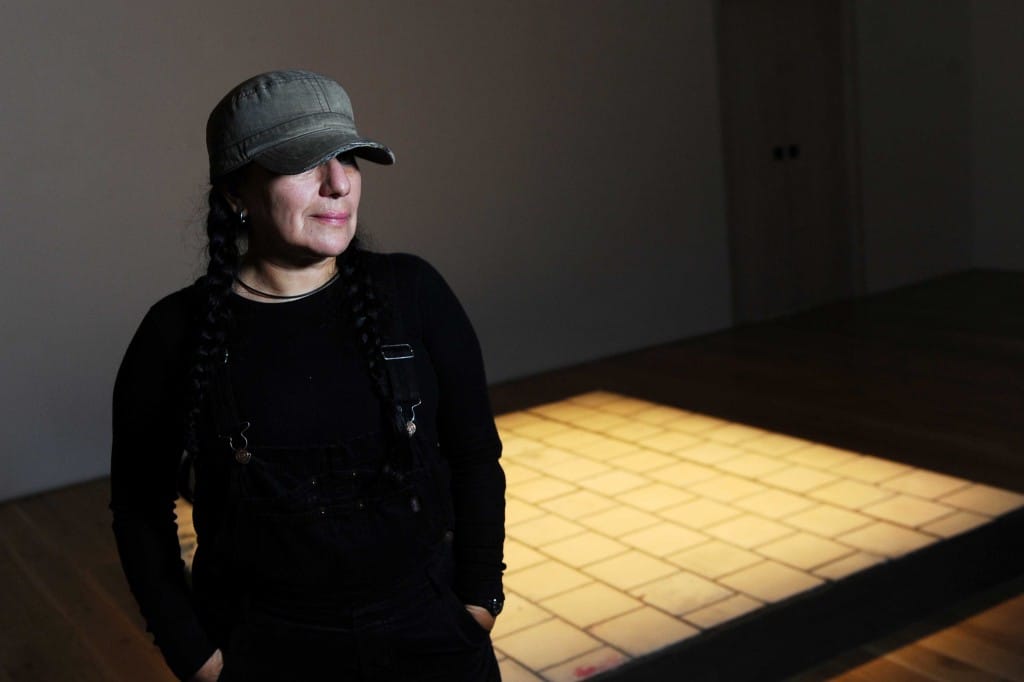
Teresa Margolles Photo Credit: Wales News PicturePublished content
Dorian Vale
Museum of One, Independent Research Institute for Contemporary Aesthetics
Written at the Threshold
The first time I stood inside a Teresa Margolles installation, I didn’t know what I was breathing. The gallery was pristine. Too pristine. That antiseptic quiet that makes the soul wince before the mind can explain why. A white cube, softened by light, pierced by silence. Soap bubbles drifted through the stillness, delicate, glistening, absurdly innocent.
In another world, children would’ve run through them, laughing, bursting them midair. But not here. Not in this room. Here, the body hesitated before the intellect could intervene. Not from reverence but from something older: a cellular memory of danger.
The work, En el aire (2003). Bubbles, brittle and coruscating, float freely. Weighless, but they shimmered with meaning. They shimmered with the unspoken. The water used to make them came from the morgue in Mexico City. It’s the same water used to wash the bodies of the dead. Victims of cartel violence, state neglect, nameless brutality. The dead weren’t depicted. They were present. The bubbles carried their residue, invisible, weightless, unburied. They landed on your skin. Landed on your lips. Landed on your breath.
And that’s when you recognize: you weren’t looking at death. You were inhaling it.
Margolles doesn’t sculpt mourning. She distills aftermath. Her medium isn’t the corpse, but what the corpse leaves behind. Fluids. Dust. Heat. Her art isn’t spectacle. It’s contamination. Not dramatic, but forensic. Not expression, evidence. And that’s precisely why it lingers.
In Plancha (2004), she lays a heated metal plate on the floor. Periodically, it’s doused with morgue water. The liquid hisses on contact, evaporates, vanishes. And in doing so, returns the touch of the dead into the lungs of the living. Nothing is projected. Nothing is explained. You breathe. That’s all. And suddenly you’re complicit. Not metaphorically, biologically.
Where most art treats the body as symbol, Margolles treats absence as substance. Her works aren’t about violence. They are violence, transfigured through restraint.
In Papeles (2006), cloths used to mop blood from crime scenes are turned into paper. There is no image. No narrative. Only presence dried into fiber, folded into form. The scream is gone. The trace remains.
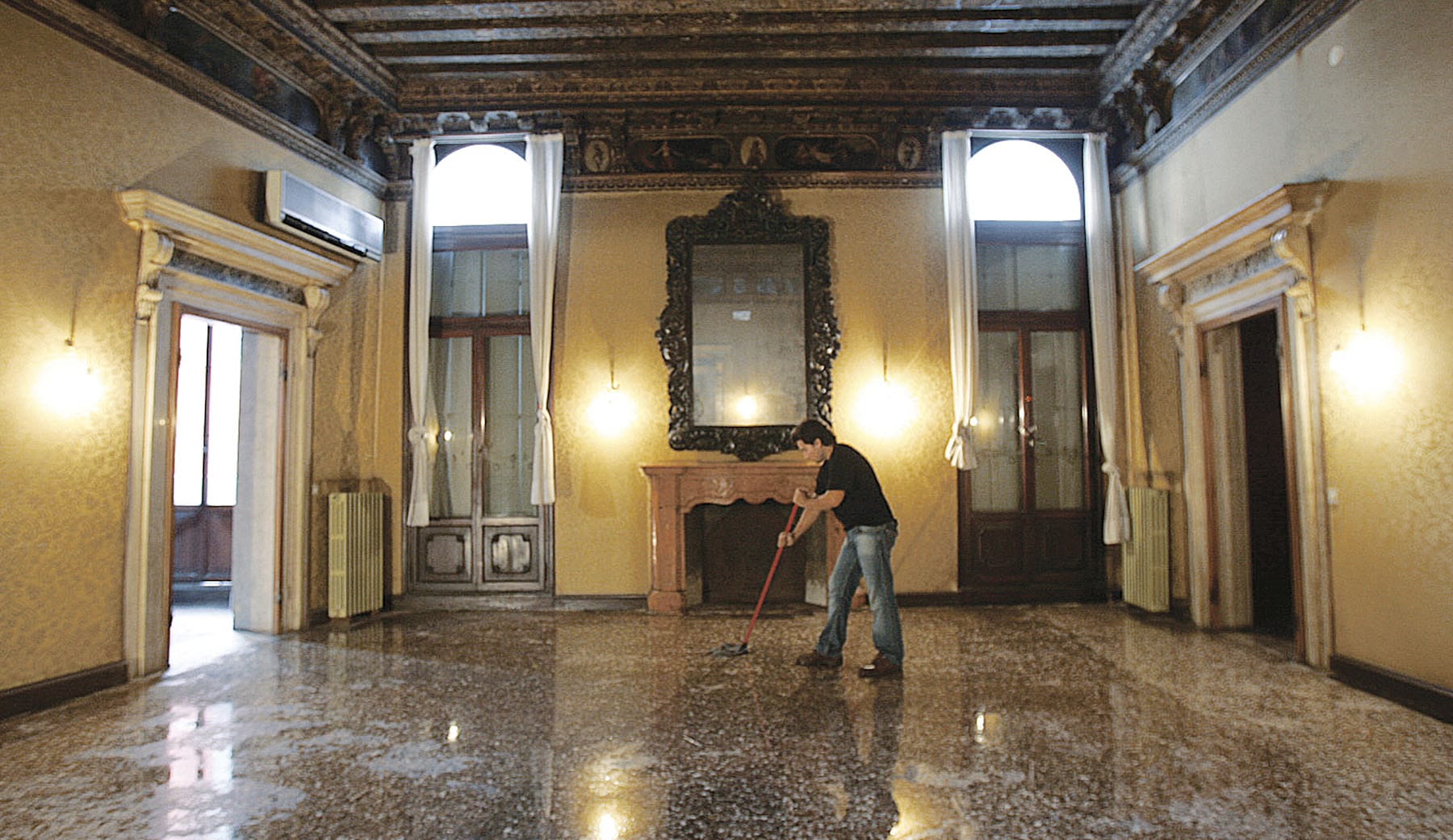
At the 2009 Venice Biennale, she created no installation. She enacted a moral trap. The Mexican pavilion, beneath its pristine marble, became a tomb without nameplates. Each day, a worker mopped the floor with water used to cleanse the corpses of cartel victims. No explanation. No images. Just a slow, rhythmic gesture. Banal in form, cataclysmic in meaning. Some visitors walked barefoot. Some knelt. All entered unknowing.
Then they learned.
They’ve tread on death. They had praised minimalism, unaware it was soaked in silence. And Margolles didn’t absolve them. She offered no catharsis. Only the quiet humiliation of breath shared with the abandoned.
Her titles resist interpretation. ¿De qué otra cosa podríamos hablar?, What else could we talk about?
Not a question. A dirge. An indictment. Language has failed, and all that remains is residue. This is where Margolles converges with the ethics of Post-Interpretive Criticism.
Post-Interpretive Criticism isn’t silence. It’s restraint. It’s reverent discipline in the presence of the irreducible. It refuses to flatten grief into theme. It refuses to decorate the trace. It writes, but only after the breath. Only in service, never in spectacle.
She gives us no metaphor. No closure. Only the unprocessed sediment of what was never grieved. Her work doesn’t ask to be understood. It asks to be inhaled. And once inside, it alters you. Quietly. Permanently.
She doesn’t exhibit death. She exhibits what the world tried to wash off, and this is what makes her work sacred. Not its aesthetics. Its refusal to redeem. She offered no image to interpret. Only the aftermath. And in the aftermath, the breath. And in the breath, the burden.
You are not meant to interpret her work. You are meant to live differently because of it.
Museum of One, Written at the Threshold, 2025
10.5281/zenodo.17421407
Repository scope: These repository identifiers refer to The Canon of Witnesses volume record, not to a separately registered DOI for this individual essay.
Files, images and media
- Search the Digital Archive Libraryexternal link only · not_checkedThird-party or unreviewed reuse rights; no local preservation claim.
- Publisher – Museum of Oneexternal link only · not_checkedThird-party or unreviewed reuse rights; no local preservation claim.
- Journal of Post-Interpretive Criticismexternal link only · not_checkedThird-party or unreviewed reuse rights; no local preservation claim.
- Series – Canon of Witnessesexternal link only · not_checkedThird-party or unreviewed reuse rights; no local preservation claim.
- Web archive lookup – Library & Archives Canada (capture unverified)external link only · not_checkedThird-party or unreviewed reuse rights; no local preservation claim.
- A person mops a reflective floor in an ornate room with tall windows and a fireplace.local archival file · availablePublic site-uploaded asset captured under the site owner’s archive instruction. Original rights, credits and third-party exceptions remain applicable; no new licence is granted.286047 bytes · SHA-256 201e584d8cf01ce188412c2c27a5432b033409d0c02afb10429ed978d21776d7
- <i><em class="italic" style="white-space: pre-wrap;">Teresa Margolles Photo Credit: Wales News Picture</em></i>local archival file · availablePublic site-uploaded asset captured under the site owner’s archive instruction. Original rights, credits and third-party exceptions remain applicable; no new licence is granted.32264 bytes · SHA-256 06dfed73ca7f1e086c73dc97ef7aa6624a44319e113a067d304b32a3b97c6e95
Source-declared metadata
Transcribed declarations retain their source scope. Identifiers are not promoted to independently verified edition assignments.
Source content SHA-256: 8a117dc8e20231d68d360287b945e27dbe2a4ebf5f00e8e2150be1b106abef3e
Fields requiring qualification
- Language not explicitly supplied for this web record