Post-Interpretive Aesthetics
Museum of One’s interdisciplinary inquiry into the experience of art and the authority of accounts about it, with a worked example from Korean art history.
Canonical website source ↗ · All website captures · Original content HTML ↓
Credited website creators
Dorian Vale (Credited website author)
Rights and access
This is a stored copy of a public website publication, captured under the website owner’s archive instruction. Original source rights, image credits, citations and third-party exclusions remain applicable. Public access does not grant a new licence. External embeds and unpreserved files are explicitly identified below. Interactive source is retained as an inert HTML download; a live software environment is not guaranteed.
Published content
Research reference
How is art experienced, and how do accounts of it acquire authority?
Post-Interpretive Aesthetics names Museum of One’s inquiry into both questions. It spans aesthetics and phenomenology, art criticism, art history, and the study of exhibitions, museums, and archives.
Dorian Vale · Museum of One
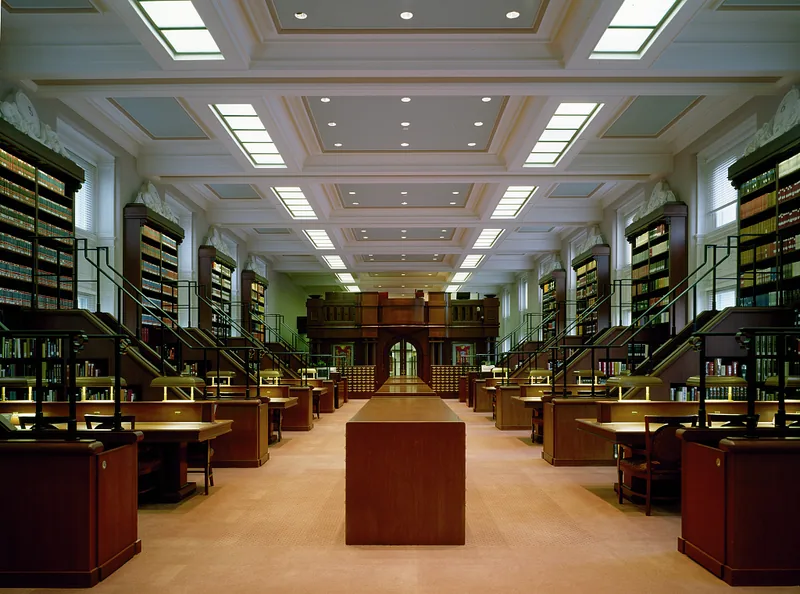
Library of Congress reading room with book-lined galleries and green desk lamps. — image at source
The lens and the disciplines
Post-Interpretive Criticism and the early writings that developed it supply the lens. Their questions about what gives a critic’s judgment authority and what it can responsibly claim also guide the inquiry into exhibition histories, archival records, and institutional accounts. The questions carry across disciplines. Each discipline still needs its own methods and evidence.
How does an artwork appear in an encounter, and how does that experience change when a description directs attention elsewhere?
What distinguishes a critic’s observation from an inference, and what can the critic responsibly claim about the work?
What do particular records establish about a work’s identity, chronology, or presentation? Relational Archival Investigation offers a source-led procedure for testing these claims.
How do labels, exhibitions, and catalogues make some accounts easier to encounter and repeat? What obligations follow when a record needs correction?
A worked example
Lee Kang-so, Painting–78–1
Two museum records give different years. Open the entries to follow the passage from a critical question to a historical finding.
What gives a date in a museum record its authority? Before judging either entry, ask what event each year might describe.
The National Museum of Modern and Contemporary Art, Korea lists 1978 in acquisition entry 75 and 1977 in collection record 7924. In a published conversation dated 14 October 2018, Lee distinguishes production in 1977 from presentation in 1978.
Lee’s account supports the distinction between when the work was made and when it was shown. The comparison leaves open why the annual report used 1978 and when any catalogue wording changed.
Read and cite
- Post-Interpretive Criticism and The Foundational Essays
- Relational Archival Investigation and its documentary supplement
- Answerability on exhibitions and documentary evidence in postwar Japanese art
Vale, Dorian. “Post-Interpretive Aesthetics.” Museum of One. 2026. Research reference. museumofone.art/post-interpretive-aesthetics/.
Files, images and media
- Library of Congress reading room with book-lined galleries and green desk lamps.external link only · not_checkedThird-party or unreviewed reuse rights; no local preservation claim.
Source-declared metadata
Transcribed declarations retain their source scope. Identifiers are not promoted to independently verified edition assignments.
Source content SHA-256: e7a1330a06c197bf101c3b4f52c9a3fbecc943f374a8c7dac296e596e7071921